- +971 433 83 178 |
- Email Us: sales@cyberlegend.ae

Top 6 Mistakes to Avoid During Network Installations in Dubai
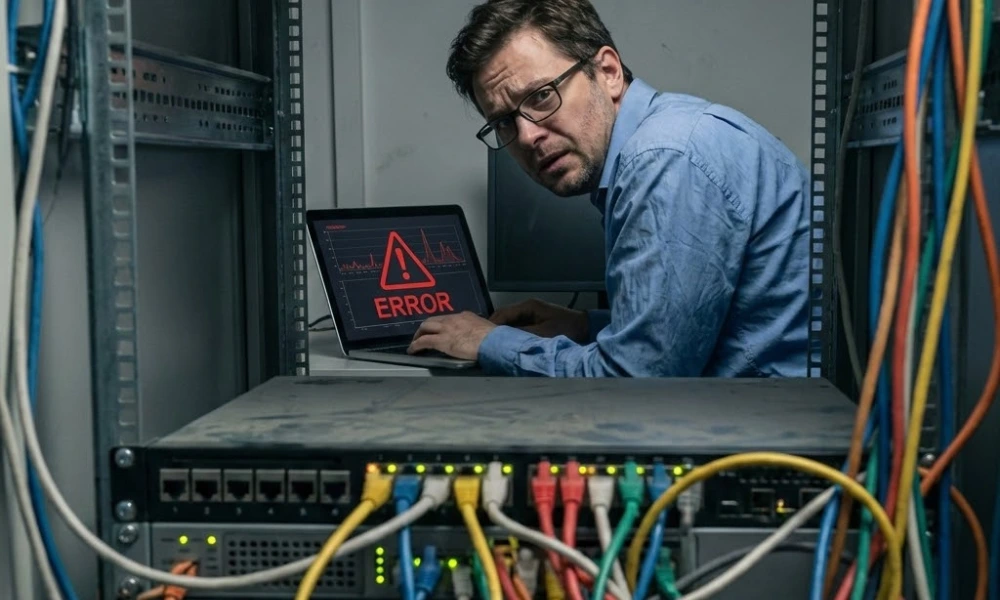
Industry data suggests that even a minor network outage can cost a local SMB between AED 10,000 and AED 50,000 per hour due to operation disability and recovering works. The root cause of such network outage isn’t cyberattacks or hardware failures but it's often poor network installation decisions made.
An improperly executed network installation creates consistent problems that destroys resources, frustrate employees, and ultimately cost a huge amount that many growing companies simply cannot afford.
Whether you're setting up a new office in Business Bay, expanding your operations in DIFC, or upgrading your IT infrastructure in Dubai Silicon Oasis, understanding these critical mistakes can save your business thousands in repairs, downtime, and lost productivity. Let's explore the six most costly network installation errors and how to avoid them.
#1: Lack of Proper Site Assessment
Getting straight into network installation without conducting a site assessment, leads to fundamental issues from day one itself.
Dubai has extreme heat and humidity, which directly impact equipment performance. Building layouts, construction materials like glass facades and metal stud walls, and physical obstacles all affect signal propagation but businesses only discover these challenges after installation is complete. Most companies also skip considering Bandwidth requirements, causing immediate capacity issues.
In Dubai's commercial environment, DEWA electrical requirements and Civil Defence regulations impact network design. These critical issues surface only after cables are installed and equipment is mounted. but by then changes become exponentially more expensive. Lack of proper assessment will cost huge amount of money.
How to Avoid
- Conduct a detailed site survey before installation, documenting usage patterns, coverage needs, and physical constraints.
- Plan for 3-5 year growth. Considering just current needs will lead to costly premature upgrades.
- Assess Dubai-specific environmental factors. Plan for server rooms with proper cooling for high ambient temperatures.
- Understand building characteristics such as glass facades, metal structures, and materials which may affect signal propagation.
- Evaluate existing infrastructure compatibility to help seamless integration with current equipment.
- Partner with experienced professionals who understand Dubai Municipality and Civil Defence requirements.
- Document bandwidth requirements based on actual usage and planned technology implementations.
- Ensure first-time inspection approval by working with specialists familiar with local regulations.
#2: Low Quality Cables and Mixed Cable Categories
Cable selection directly impacts network performance, still many businesses make critical errors in this area. Companies try to save on upfront costs and install outdated cables. Most make the mistake of mixing different cable categories within the same network and purchase low-quality, non-certified cables from dubious suppliers.
A fact most of the companies are not aware is that the network performance is only as fast as its slowest component. For example, when Cat5e cables are mixed with Cat6 infrastructure, the entire network operates at Cat5e speeds. which means you will only get 100 Mbps instead of the 1 Gbps or 10 Gbps your equipment can deliver. This will affect cloud applications, video conferencing, and data transfers across your entire organization.
How to Avoid
- Always choose updated models for all new network installations in offices. This will help to future-proof infrastructure for almost 5-10 years.
- Maintain uniformity across your entire network. Never mix cable categories within the same installation.
- Source high-quality cables and certified components from reputable suppliers who provide authentic and standard products.
- Avoid duplicate or second quality networking cables that are common in regional markets. It may only cost you low budget for purchase but the loss in business will be severe.
- Implement fiber optic cabling for server rooms, high-traffic areas, and backbone connections between floors
- Choose environment-specific cables that meet the requirements for your particular installation conditions
- Verify cable certifications to ensure all components meet international performance standards. You may need an expert service for this.
- Eliminate electromagnetic interference concerns by using fiber optic solutions where appropriate
#3: Inadequate Cable Management and Labelling
Proper cable management is not a fancy concern, but it directly affects network reliability and maintenance costs.
Most common cable mismanagement include:
- Tangled, disorganized cables with no labelling systems for identification.
- Data cables running parallel to electrical power lines, causing electromagnetic interference.
- Exceeding maximum cable length limitations of 100 meters for Ethernet.
- Violating minimum bend radius specifications, often with zip ties pulled too tightly.
The problem is only seen when technicians have to spend hours tracing connections. A simple changes may take hours of work. Electromagnetic interference from nearby power cables can degrade signal quality and will cause connectivity issues from time to time.
How to Avoid
- Label every cable at both ends with clear identification of source and destination points using a uniform scheme.
- Install cable trays and proper routing pathways. This will help to organise cables logically and professionally.
- Maintain a 30-centimeter minimum distance between data cables and electrical power lines to prevent EMI.
- Cross power lines at 90-degree angles when cable paths must intersect. This can reduce interference.
- Respect bend radius specifications For example, the bend radius for Cat6 cables is 4 times the cable diameter.
- Use hook-and-loop cable ties instead of plastic zip ties that can be over-tightened and damage cables.
- Avoid exceeding maximum cable lengths of 100 meters for Ethernet to maintain signal integrity.
- Create comprehensive cable documentation that makes future troubleshooting and modifications easy and cost effective.
#4: Ignoring Future Scalability and Growth
One of the most expensive mistakes you can make when installing a network is ignoring future scalability and growth. Businesses often install exact port capacity with no room for expansion, failing to consider future IoT device proliferation like smart sensors, access control systems, and CCTV cameras. They underestimate wireless access point requirements like mobile device usage increases. Not installing additional cable connections to conference rooms and common areas where future expansion is likely is also a common mistake.
Dubai's business environment changes rapidly. Companies grow, add employees, implement new technologies, and expand operations in speed. A network designed with no capacity buffer becomes obsolete within 2-3 years. This leads to disruptive and expensive upgrades that usually cost three times more than planning.
How to Avoid
- Design with a minimum 30-40% capacity buffer beyond current requirements. This provides growth headroom without overbuilding.
- Install additional cable runs to conference rooms, break areas, and open spaces during initial installation.
- Plan wireless infrastructure for projected usage. Modern Dubai offices typically need one access point per 15-20 users.
- Design modular network architecture. This allows expansion without disrupting existing infrastructure.
- Configure patch panels and switches with empty slots ready for future connections.
- Consider IoT device growth including smart sensors, access control systems, and security cameras.
- Plan for bandwidth increases as applications migrate to cloud-based platforms.
- Work with experienced network designers who understand business growth patterns and technology trends for each industry.
- Account for mobile device proliferation and increasing wireless connectivity demands.
#5: Skipping Professional Installation and Testing
Some businesses attempt to reduce costs by relying on inexperienced technicians or DIY installation approaches. Non-certified technicians lack proper training, tools, and certification equipment. They skip cable certification testing after installation and don’t provide any network documentation or diagrams.
This end up in failing to follow Dubai Municipality regulations and building codes. Improper termination techniques cause signal loss, but you will not have any professional warranty coverage for installation workmanship.
Professional network installation requires specialised knowledge and equipment. Without these, even new cables and equipments will only deliver substandard performance. Many businesses only discover installation quality issues when network problems emerge months later. At this point re-installations cost more than proper installation would have originally.
How to Avoid
- Hire certified network installation professionals with proven experience in Dubai's commercial environment.
- Verify certifications from recognised bodies like BICSI (Building Industry Consulting Service International)
- Request and check references from similar businesses to verify completed project quality.
- Demand complete cable certification testing using professional equipment like Fluke Networks testers.
- Require certification reports documenting that every cable meets performance specifications and providing baseline data for future troubleshooting
- Obtain comprehensive network documentation including cable routing diagrams, patch panel schedules, network topology maps, and equipment configurations.
- Ensure compliance with Dubai Municipality building codes, Civil Defence safety requirements, and DEWA electrical standards.
- Get written warranty coverage on installation workmanship, typically 1-5 years depending on project scope.
- Verify installers understand local regulations to ensure compliance from the start and avoid failed inspections.
#6: Neglecting Network Security During Installation
Network security should be built into infrastructure from the installation phase, not added later as an afterthought. Companies fail to implement network segmentation between guest Wi-Fi and business operations, leaving network closets and server rooms unsecured without access controls.
One important thing everyone forget is that the default passwords remain active on switches, routers, and all access points. Some companies may focus on securing their networks but often fail when it comes to safekeeping network infrastructure. VLAN configuration and compliance requirements to isolate sensitive departments often go unconsidered.
Dubai's Data Protection Law and industry-specific regulations require businesses to implement appropriate security measures. Network infrastructure that isn't designed with security in mind creates vulnerabilities that can lead to data breaches, compliance violations, and financial losses worth millions for Middle East businesses.
How to Avoid
- Implement VLAN segmentation from installation. Separate guest, employee, and sensitive department networks at the infrastructure level.
- Create security boundaries that can stop unauthorised access even if one network segment is compromised.
- Prepare secured network infrastructure rooms with locks, monitoring, and restricted access to authorised IT personnel only.
- Integrate physical access control systems with your IT security strategy for comprehensive protection.
- Change all default passwords immediately after installation and document them using proper password management systems.
- Configure network equipment with security best practices. Encrypt management access, disable unnecessary services, and plan firmware update schedules.
- Plan for industry-specific compliance requirements. For example: HIPAA for healthcare, specific data protection for financial services.
- Work with security-aware network designers who understand Dubai's Data Protection Law and regulatory requirements.
- Implement monitoring systems for network infrastructure rooms to track access and detect security incidents.
Conclusion
Network installation mistakes are expensive and disruptive but still entirely preventable. A good network system supports your business growth. But without proper planning, quality materials, professional installation, and forward-thinking design it will only disrupt your business growth.
It's easy to reduce upfront costs through shortcuts but the long-term expenses caused by poor network installation will exceed the initial savings. Businesses that invest in professional IT infrastructure enjoy reliable performance, easy scalability, minimal downtime, and lower total cost of ownership over the life of the system.